
Resources

Handouts for Your Clients
Below are links to handouts for some of the commonly diagnosed ophthalmic diseases in dogs and cats. The handouts are intended to serve as resources for you to provide to your clients when these diseases are diagnosed in your hospital. If you have specific questions about the management of these diseases or would like to refer a patient with one of these diseases to The Eye Vets, please contact us at (615) 640-6335 or info@theeyevets.com.

Commonly Used Ophthalmic Medications
There are numerous ophthalmic medications to treat the various disease processes and injuries that we see in our patients. And it can be overwhelming! Below is a table of medications to consider prescribing or stocking in your hospital if treating ophthalmic disease or injury. Please contact us at (615) 640-6335 or info@theeyevets.com with any questions about a specific medication and its appropriate uses.

Click the chart to download.
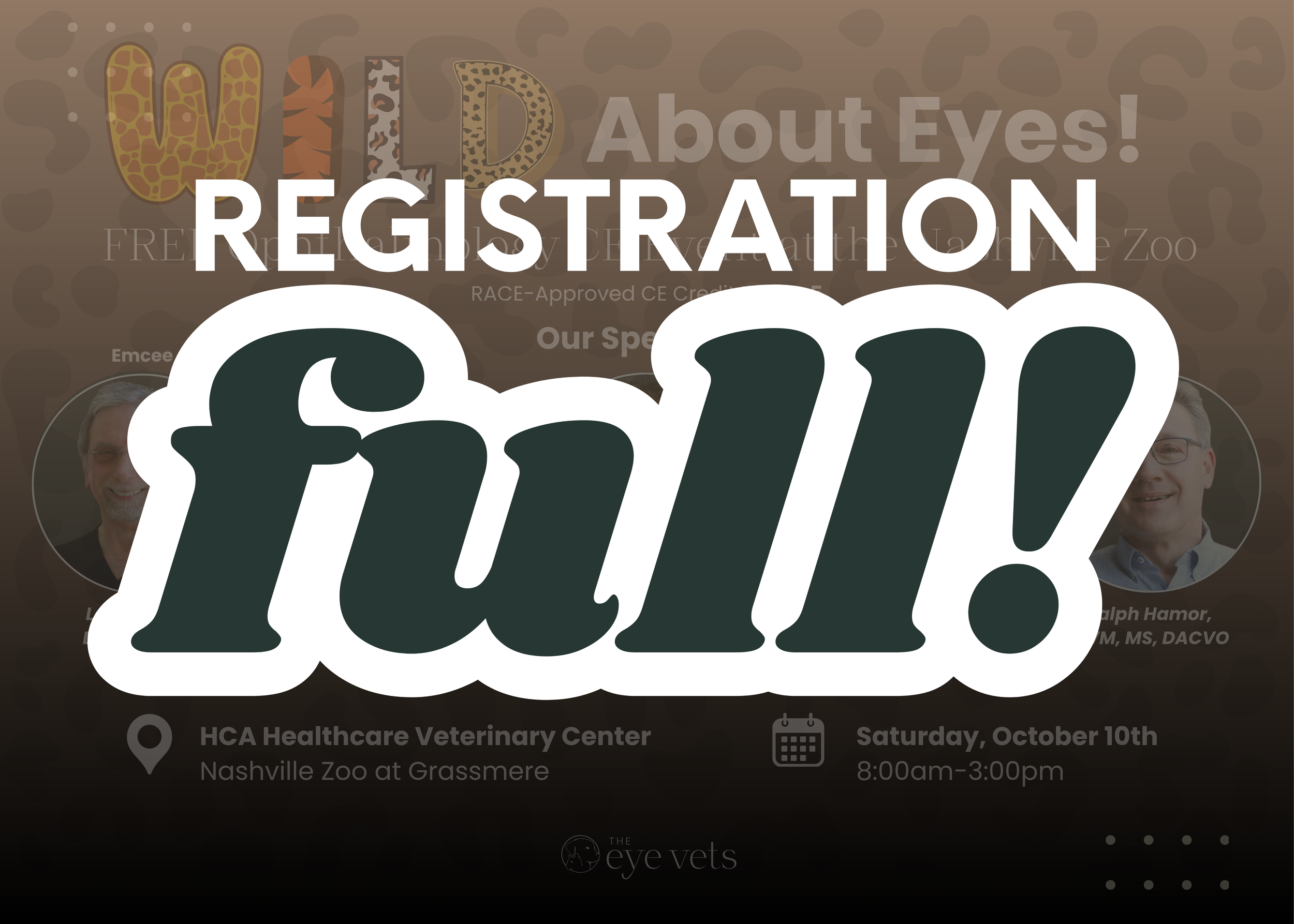
To attend this CE Event, please fill out the
Registration Form below:
Seats are limited for this lecture and it is for VETERINARIANS ONLY.
Presentation approved by AAVSB in jurisdictions that recognize RACE approval.
You’re Invited to a Full Day of Complimentary Continuing Education in Veterinary Ophthalmology!
Hosted by The Eye Vets at the Nashville Zoo
📅 Saturday, October 10th | 8:00 AM – 3:00 PM
Join us for a unique and informative CE event set in the beautiful surroundings of the Nashville Zoo.
Enjoy breakfast at 8:00 AM
Educational sessions begin promptly at 9:00 AM
Lunch from 12:00 – 1:00 PM
Final presentation concludes at 3:00 PM
🎟️ All attendees will receive a complimentary pass to the Nashville Zoo.
We look forward to an engaging day of learning, networking, and wildlife!
